U.S. Senator — New York, Class I
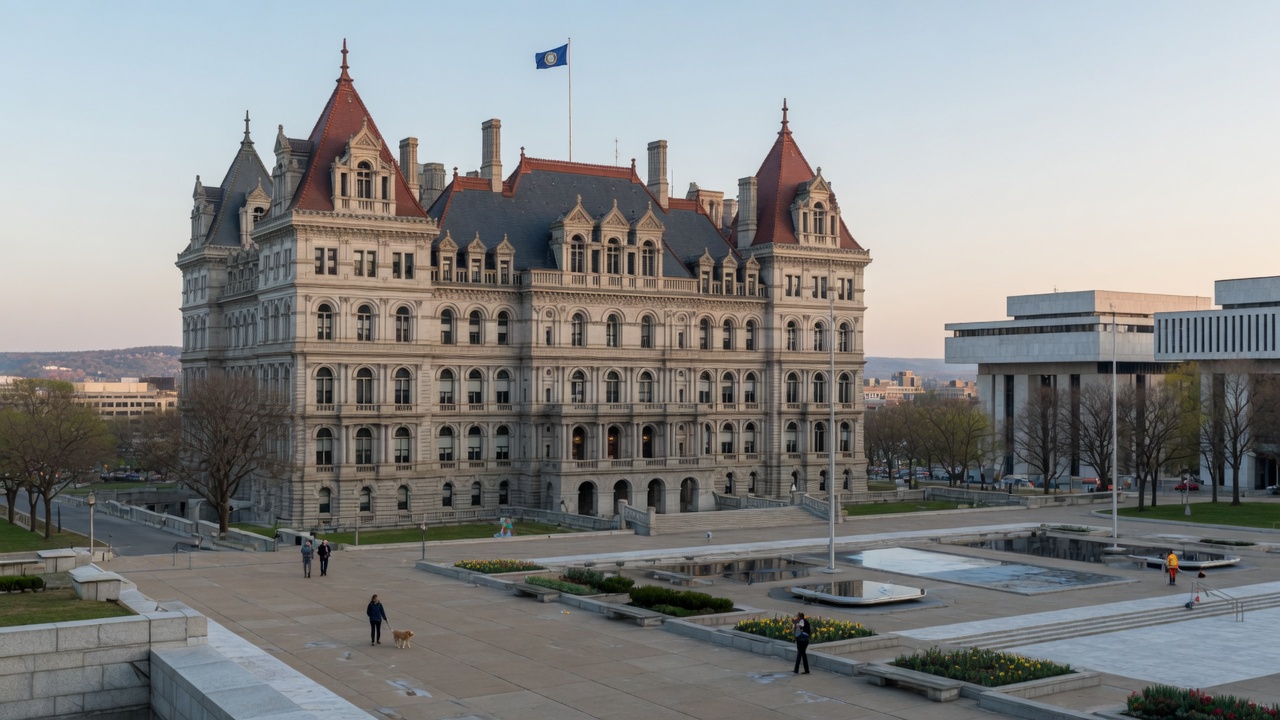
New York Class I · educational cover · regional illustration
What this office is
A United States Senator is a federal legislator elected by the whole state. New York has two Senate seats. This page is Class I — one of those two. The term is six years. Class I last stood in the regular election of 2024. The next regular election is 2030. The term of record runs through 3 January 2031.
New York has no Class II. The other seat is Class III. There is no 2026 U.S. Senate race in New York. Florida and Ohio 2026 Class III specials are not this office.
This is not a House district. New York has sixty-two counties. Albany is the capital — the granite capitol on the hill, not Manhattan. New York City is not the map. Buffalo is not the capital. Syracuse is not the capital. The North Country, the Southern Tier, Long Island, and the five boroughs hire the same Senator.
New York’s House map splits the work into twenty-six districts. The Senate seat does not split.
This page is Side One: inform, educate, inspire. It is not the race, not legal advice, and not an official government notice. For the next cycle, use the election twin.
Confirm the Senator of record on Senate.gov — contact and Class I.
How the job fits this community
Class I is the longer remaining regular clock after 2026. The inbox is still the state: a capital file from Albany, a five-borough file that is not the capital, a Long Island file that is not Manhattan, a Hudson file, an Adirondack file, a Finger Lakes farm file, a Buffalo–Niagara file, and a Southern Tier town that never makes a national broadcast.
People here meet the federal government as SSA, VA, IRS, USCIS, a delayed Corps permit on the Hudson or the Canal, a farm bill, a lake-effect year, and a subway file that is not the whole office. The Senator is the human hinge between that map and Washington — for six years, not two.
Staff who only know Midtown, or only know the Plaza, are not doing the job. New Jersey is a different state. Pennsylvania is a different state. St. Lawrence County still writes letters.
What the job entails
- Legislate. Introduce and cosponsor bills. Sit on committees. Vote.
- Advice and consent. Nominations and treaties.
- The purse, with the House. Appropriations decide what actually gets built or staffed.
- Oversight. Hearings and letters that watch the executive branch.
- Casework. Statewide — 62 counties, including towns that are not on the Thruway.
- Two homes. Washington for votes. New York for the people who hired the office.
What a day is like
There is no single Tuesday. In Washington: a visitor from Albany and a visitor whose drive started in Plattsburgh, Elmira, or a Brooklyn precinct that is not the 7th House district. In the state: a capitol desk, a harbor day that is not the whole state, and a two-lane North Country day that is not New York’s 21st.
The staff is the office. A serious Senator is a serious principal: clear priorities, honest casework, no rumor as policy.
Place snapshot (verify official sources)
- State: New York · Chamber: U.S. Senate · Seat: Class I of 2
- Next regular election: 2030 (New York has no 2026 Senate race)
- Land the office serves: the whole state — Albany, upstate, Island, five boroughs
- Always verify the Senator of record on Senate.gov
Orientation adapted from public Senate class lists and New York official election sources for education. The Senator of record is whatever Senate.gov says today.
What this is not
- Not New York’s Class III Senate seat (that twin is Class III; next regular 2028).
- Not a U.S. Representative (twenty-six House districts; two-year terms).
- Not the Governor.
- Not the Mayor of New York City, Buffalo, or Rochester.
- Not New Jersey. Not Pennsylvania.
- Not a campaign flyer. This page does not tell anyone who to vote for.
Official doors
The arena: 2030 election — New York Class I