State Senate — Indiana
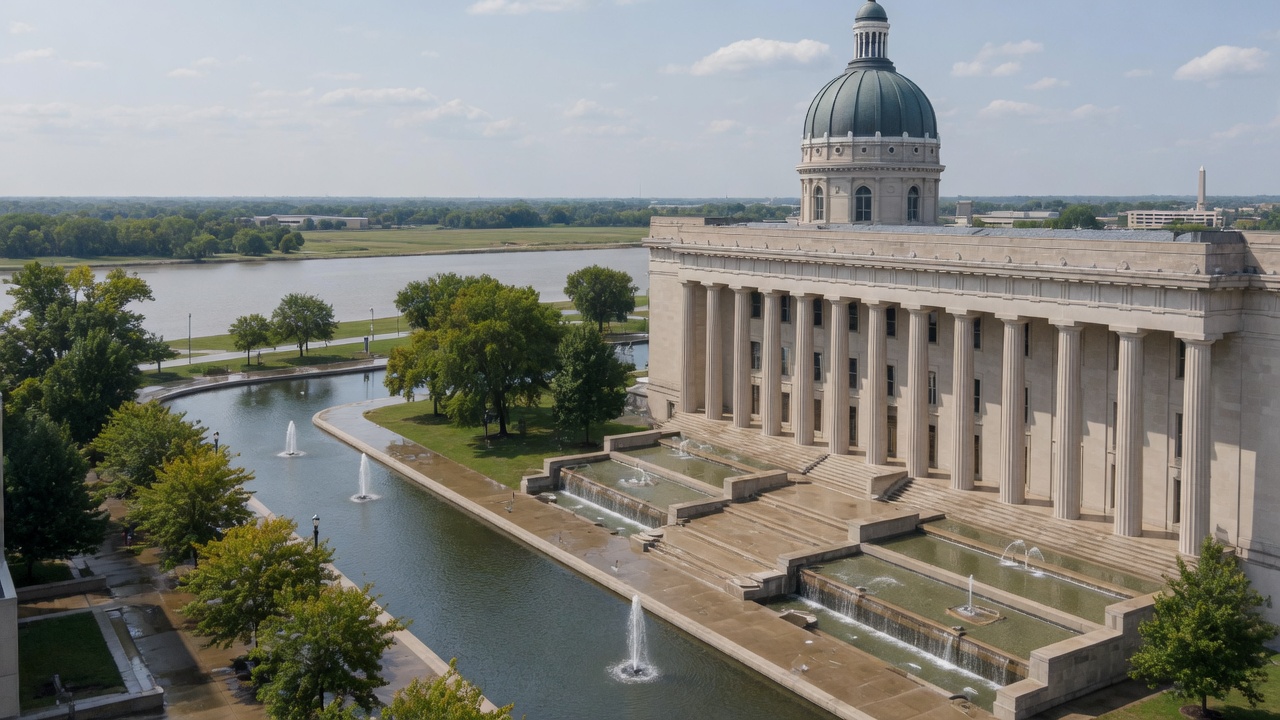
Indiana State Senate · educational cover · Greek Senate · American Future Type
Fifty desks, twenty-five this cycle
The Indiana State Senate is the upper house of the Indiana General Assembly. Fifty Senators. Article 4 of the Indiana Constitution writes that chamber: not more than fifty Senators, not more than one hundred Representatives. The General Assembly’s own door at iga.in.gov is the roster of record.
The term is four years. Indiana staggers this chamber. Twenty-five of fifty stand every even year. This is not Alabama’s all-up clock. This is not Iowa’s odd-number rule. Indiana does not split the class by even- versus odd-numbered districts. The twenty-five that stand in 2026 are a mixed set. Confirm this district on the Secretary of State’s sample ballot. Do not invent a 2026 race for a seat that sat in 2024 and sits again in 2028.
The next regular class is Tuesday, November 3, 2026. Senators take office the day after the general election (Article 4, Section 3). That is Indiana’s clock. It is not midnight of election day written Alabama’s way. It is not January. Winners of this class are in the chair on Wednesday, 4 November 2026.
This is not a United States Senate seat. The federal files live at Indiana Class I and Indiana Class III. Indiana has no Class II and no 2026 U.S. Senate race. This chamber does not vote in Congress, does not confirm federal judges, and does not sit in Washington.
This is not the Indiana House of Representatives. One hundred desks is a different house, on a two-year clock, and all one hundred stand in 2026. This is not the Governor — Indiana’s Governor is 2028. This is not the Attorney General — that desk is 2028 as well. This is not the Mayor of Indianapolis.
Indianapolis is the capital, in Marion County, on the White River and the Central Canal, at the Statehouse. Fort Wayne is not the capital. Lake Michigan is a real shore in the northwest counties. It is not the map. Farm counties, the Ohio River at Evansville, the Calumet, Bloomington hills, and Unigov Marion hire this chamber — fifty districts, not one Circle.
Indiana is ninety-two counties. A State Senate district is not the whole state. Seat packets, when they ship, teach this district. This page teaches the chamber.
This page is Side One: inform, educate, inspire. It is not the race, not legal advice, and not an official government notice. For this cycle, use the election twin.
Confirm the Senator of record on iga.in.gov — Senators.
The Lieutenant Governor still gavels
The Lieutenant Governor is President of the Senate. That is Indiana’s clock. It is not Colorado’s. It is not Kentucky’s. The body elects a President Pro Tempore who actually runs the floor when the Lieutenant Governor is not in the chair. Majority and minority leaders are chosen by caucus. Standing committees — Appropriations; Tax and Fiscal Policy; Judiciary; Education and Career Development; Health and Provider Services; Natural Resources; Local Government — are how the work is actually cut. Confirm the current book on iga.in.gov. Do not treat a news comment as the committee list.
A Senator has two homes. The Statehouse for the session. The district for the people who hired the seat. Staff who only know Monument Circle, or only know a lakeshore casino as the state, or only know a university town as Indiana, are not doing the job. Monument Circle is the city. The Statehouse is the capitol. The Mayor of Indianapolis is a different office (Mayor of Indianapolis).
Article 4 and the day-after oath
Indiana writes state law in two houses. A bill that is not passed by this Senate is not Indiana law. The Governor signs or vetoes; the Legislature can override where the constitution actually gives it. Item veto on appropriations is a Governor tool.
Advice and consent is real here, and it is state. Boards, some agency heads, some appointments the statute actually names — not a U.S. Senate hearing.
Vacancies are not a Governor’s appointment of the Senator. Indiana uses a caucus of precinct committee members of the same party from that district (Title 3). Confirm on the Election Division. Do not invent a holdover.
There are no legislative term limits in Indiana. Consecutive-term caps that apply to the Governor are not this desk.
Qualifications sit in Article 4, Section 7: a Senator at least twenty-five, a citizen of the United States, an inhabitant of Indiana for two years, and of the district for one year immediately preceding the election. Always verify the current text. This page is teaching, not a filing packet.
Redistricting is legislative. The General Assembly draws the maps. Treat a statute and a court order as clocks. Confirm which map a given election actually used on the Election Division — not on a thread.
iga.in.gov is the ledger
The official legislative door is iga.in.gov. Bills, fiscal notes, committee notices, and the member of record belong there — not on a forwarded screenshot. Session calendars and today’s schedule are posted on that site. Indiana’s regular session is a short clock by national measure. A missed legislative day is a real cost.
The official election door is the Indiana Election Division. Registration, ballot status, and the sample ballot belong on IndianaVoters and the ninety-two county clerks.
Staff who only know a Facebook page are not doing the job. A constituent who was told “you can vote by text” was not told the truth until a .gov page says otherwise.
Advice and consent that stays in Indiana
A confirmation hearing is this chamber’s justice minute: an appointee the Governor named, a board that will actually touch a license, a prison, a school, or a river. It is not a trial. The Attorney General is the state’s lawyer (Attorney General of Indiana — next regular 2028). The Senate is not that office.
Equal protection on this map is not an Indianapolis-only file. A Calumet precinct and a Switzerland County river town hire the same Constitution. A district that never makes a Monument Circle broadcast still sits in this chamber. The U.S. Attorney and a circuit judge are not this Senator.
After a flood year and a lake-effect night
Care this office actually gives is a bill and an oversight hour, not a church. Do not invent a ministry. A White River flood in Marion County, a lake-effect night on the Calumet, a drought on farm ground that never makes a Circle press conference, an Ohio River ice year at Evansville — those land as appropriations, emergency statutes, and questions to agencies the Governor runs.
Rural hospitals, a state prison, Medicaid as state policy, INDOT, a National Guard year in state status: the Senate does not command the Guard (the Governor does). It writes and oversees the statutes those desks live under. Chaplaincy that exists in a prison or a Guard unit is that department’s staffing. It is not this page’s pulpit.
How a student learns the Statehouse
The Legislature’s own shops — bill drafting, fiscal notes, the Legislative Services Agency — are how the work is actually learned. Page and intern openings belong on official legislative and university civic pages, not on a campaign site. A student who wants the civic path confirms those doors on .gov and campus postings.
County clerks and the Election Division are how election work is learned. Marion County is Unigov. It is not this chamber. A law-school clinic that files in Indianapolis still files in a court, not in a Senate committee.
White River is not Lake Michigan as the whole map
Census and reapportionment. The state budget versus a supplemental. A short-session clock. A flood stage on the White, the Wabash, or the Ohio. A lake-effect warning in Lake and Porter. A drought report from a farm county extension office. Committee attendance. Confirmation questionnaires. Dockets that a bill would actually change.
That is situational awareness for this chamber. It is not spy fiction. It is not a Mayor’s night radio. It is not the Attorney General’s case map.
Ninety-two counties hire Indianapolis
The inbox is a state inbox split fifty ways: a capital file from the Statehouse that is not Fort Wayne; a Calumet steel-and-lake file that is still Indiana, not Illinois; a Fort Wayne city file that is not the capital; a farm-county file from a courthouse that never makes a Circle broadcast; a Bloomington campus-and-hills file; an Evansville Ohio River file; a south-central limestone file; and a Unigov Marion file that is city-county and still only one slice of this chamber.
The White River, the Wabash, the Ohio, the Tippecanoe, and the Central Canal in Indianapolis are this hydrology. A desert fountain is not this land. A Great Lakes postcard is not the whole state.
Illinois is a different state. Ohio is a different state. Michigan is a different state. Kentucky is a different state. Ohio County looks south and remains Indiana. Hammond looks at Chicago and remains Indiana.
Staff who only know the Statehouse, or only know Monument Circle as Indiana, are on the wrong office.
Place snapshot (verify official sources)
- State: Indiana · Office: State Senate · 50 seats
- Term: four years · staggered · 25 of 50 each even year · not even/odd by district number
- Next regular class: 3 November 2026 — confirm this district on the sample ballot
- Take office: the day after the general election
- Capital: Indianapolis (Statehouse, Marion County) — not Fort Wayne, not the lakeshore as the capital
- Counties: 92
- Land the chamber serves: the whole state, in fifty districts — Calumet, Fort Wayne, farm counties, Bloomington hills, Ohio River, Unigov Marion
- Always verify the Senator of record on iga.in.gov
Orientation adapted from the Indiana Constitution, the General Assembly, and Indiana official election sources for education. The Senator of record is whatever the official site says today.
What this is not
- Not a United States Senator (Class I is 2030; Class III is 2028). No 2026 U.S. Senate race.
- Not a U.S. Representative (nine House districts; two-year terms).
- Not the Indiana House of Representatives (100 seats — a different chamber; all 100 on 2026).
- Not the Governor of Indiana (2028). Not the Lieutenant Governor (President of this Senate, a different office).
- Not the Attorney General of Indiana (2028).
- Not the Mayor of Indianapolis, Fort Wayne, Evansville, or South Bend.
- Not Illinois. Not Ohio. Not Michigan. Not Kentucky.
- Not Fort Wayne as the capital. Not Lake Michigan as the whole map.
- Not a campaign flyer. This page does not tell anyone who to vote for.
Official doors
- Indiana General Assembly
- Indiana Senate roster
- Indiana Election Division
- IndianaVoters
- Office of the Governor (not this chamber)
The arena: 2026 election — Indiana State Senate