State Senate — California
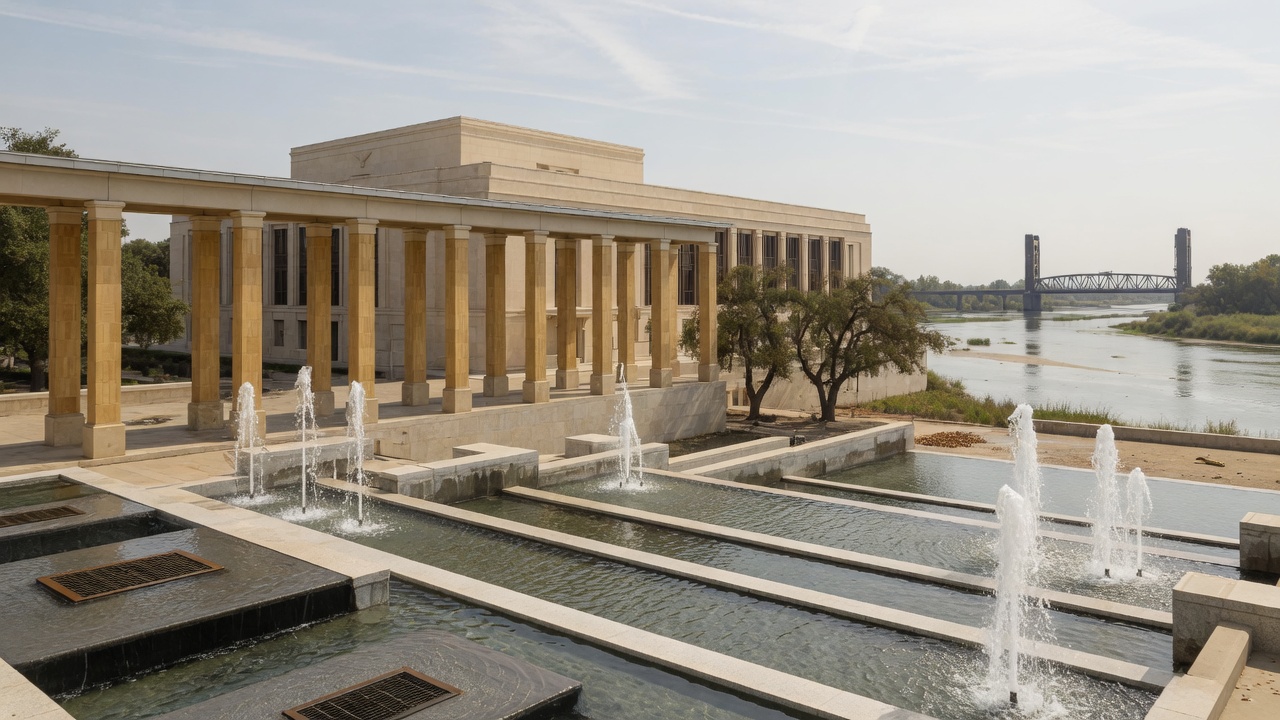
California State Senate · educational cover · Greek Senate · American Future Type
Forty desks, twenty this cycle
The California State Senate is the upper house of the California Legislature. Forty Senators. Article IV of the California Constitution builds the Legislature in two houses: a Senate of forty, an Assembly of eighty. The Legislature’s own door at senate.ca.gov is plain: forty desks, not one coastal skyline.
The term is four years. California staggers this chamber by odd- and even-numbered districts. Half the Senate stands every even year.
2026 is the even-numbered class: districts 2, 4, 6, 8, 10, 12, 14, 16, 18, 20, 22, 24, 26, 28, 30, 32, 34, 36, 38, 40 — twenty of forty. The odd-numbered districts sat in 2024 and sit again in 2028. Do not invent a 2026 race for District 1, 3, 5, or any odd number. Do not confuse this stagger with Alaska’s letters or Arkansas’s lots.
The next regular election for this class is Tuesday, November 3, 2026. Winners take office the first Monday in December next following their election (Article IV, Section 2). That is California’s clock. It is not midnight of election day. It is not January. It is not Alabama.
This is not a United States Senate seat. The federal files live at California Class I and California Class III. California has no Class II and no 2026 U.S. Senate race. This chamber does not vote in Congress, does not confirm federal judges, and does not sit in Washington. A State Senate desk is a different file from a U.S. Senate class.
This is not the California State Assembly. Eighty desks, two-year terms, all up every even year — a different house. This is not the Governor. This is not the Attorney General. This is not a Mayor.
Sacramento is the capital, at the Sacramento and American rivers in the Central Valley. Los Angeles is not the capital. San Francisco is not the capital. The coast, the Sierra, the desert, the border, and a valley town that never makes a coastal broadcast hire this chamber — forty districts, not one harbor.
California is fifty-eight counties. Los Angeles County is the most populous. It is not the map. A State Senate district is not the whole state. Seat packets, when they ship, teach this district. This page teaches the chamber.
This page is Side One: inform, educate, inspire. It is not the race, not legal advice, and not an official government notice. For this cycle, use the election twin.
Confirm the Senator of record on senate.ca.gov.
Article IV and the December oath
Article IV, Section 2: a Senator’s term is four years and commences the first Monday in December next following election. The Lieutenant Governor is President of the Senate. The working gavel is the President pro Tempore, elected by the body. Standing committees — Budget and Fiscal Review; Judiciary; Governance and Finance; Natural Resources and Water; Education; Public Safety; Rules — are how the work is actually cut. Confirm the current roster on senate.ca.gov. Do not treat a news comment as the committee book.
Qualifications: a U.S. citizen, an elector, a resident of the legislative district for one year immediately preceding the election. Always verify the current text. This page is teaching, not a filing packet.
Proposition 28 (2012) set a twelve-year lifetime cap on combined service in the Assembly and the Senate. That is a clock, not a crown. Consecutive-term math belongs on the official roster.
This is a full-time legislature. Two homes still apply: Sacramento for the session. The district for the people who hired the seat. Staff who only know the Capitol Mall, or only know a coastal skyline as the whole state, are not doing the job. The Mayor of Sacramento is a different office (Mayor of Sacramento).
Vacancies: the Governor calls a special election as statute actually provides. Do not invent a holdover. Confirm on the Secretary of State.
A two-thirds vote is the tax-and-amendment hinge in this house. Teach it as a rule, not as a scoreboard.
senate.ca.gov and the top-two file
The official legislative door is senate.ca.gov and legislature.ca.gov. Bills, amendments, committee notices, and the member of record belong there — not on a forwarded screenshot. Session calendars and today’s schedule are posted on those sites.
The official election door is the California Secretary of State — Elections. Registration, ballot status, and the sample ballot belong on the Secretary of State and the county elections official in this county — fifty-eight of them. VoteCal is the statewide file. Confirm on .gov.
Staff who only know a Facebook page are not doing the job. A constituent who was told “you can vote by text” was not told the truth until a .gov page says otherwise.
California’s top-two primary (Proposition 14) is state election law: the two highest vote-getters, regardless of party, advance to November. Teach that clock on the Secretary of State. Do not import another state’s runoff or Alaska’s top-four ranked-choice card.
Redistricting of this map is the Citizens Redistricting Commission. Congressional lines are a different file — including any temporary congressional map a statewide measure may have set. State Senate lines are the Commission’s Senate map until the next census cycle. Do not mix those desks. Maps get litigated. Treat a court order and a stay as clocks. Confirm which map a given election actually used on the Commission and the Secretary of State.
Consent that is Sacramento, not Washington
A confirmation hearing is this chamber’s justice minute: an appointee the Governor named, a board that will actually touch a license, a prison, a levee, a water right, or a school. It is not a trial. It is not a U.S. Senate hearing. The Attorney General is the state’s lawyer (Attorney General of California). The Senate is not that office.
Equal protection on this map is not a Los Angeles-only file and not a San Francisco-only file. A Sierra county, an Imperial Valley farm, a North Coast timber precinct, and a Central Valley town hire the same Constitution. A district that never makes a coastal broadcast still sits in this chamber. The U.S. Attorney and a superior-court judge are not this Senator.
After a fire year and a levee night
Care this office actually gives is a bill and an oversight hour, not a church. Do not invent a ministry. A fire year in the Sierra foothills, a levee night in the Delta, a drought year on the Sacramento and the Colorado, an atmospheric river that is not a Sacramento press conference — those land as appropriations, emergency statutes, and questions to agencies the Governor runs.
Rural hospitals, a state prison, Medi-Cal as state policy, the National Guard in state status: the Senate does not command the Guard (the Governor does). It writes and oversees the statutes those desks live under. Chaplaincy that exists in a prison or a Guard unit is that department’s staffing. It is not this page’s pulpit.
How a student learns this Senate
The Legislature’s own shops — the Office of Legislative Counsel, the Legislative Analyst’s Office, bill drafting, fiscal notes — are how the work is actually learned. Fellowship, intern, and session-staff openings belong on official legislative and university civic pages, not on a campaign site. A student who wants the civic path confirms those doors on .gov and campus postings.
County elections offices, the Secretary of State, and the Citizens Redistricting Commission are how election and map work is learned. Los Angeles County is a county. It is not this chamber. A law-school clinic that files in Sacramento still files in a court, not in a Senate committee.
Snowpack, the Delta, and a full-time clock
Census and the Commission’s Senate map. Snowpack and the State Water Project as state files, not slogans. A full-time session calendar. A fire-weather year. An atmospheric-river forecast. A levee report from the Delta. Committee attendance. Confirmation questionnaires. Dockets that a bill would actually change.
That is situational awareness for this chamber. It is not spy fiction. It is not a Mayor’s night radio. It is not the Attorney General’s case map.
Fifty-eight counties hire this chamber
The inbox is a state inbox split forty ways: a capital file from Sacramento that is not Los Angeles and not San Francisco; a Central Valley farm-and-levee file; a Sierra snowpack-and-fire file; a North Coast timber-and-harbor file that is not the Bay as the whole state; a Bay Area file that is many counties, not one city; a Los Angeles basin file that is not the capital; an Inland Empire file; a San Diego and border file; a Central Coast file; a desert file from the Mojave and the Colorado; and a mountain county that never makes a coastal broadcast.
The Sacramento, the American, the San Joaquin, the Delta, the Colorado, and the Sierra snowpack are this hydrology. Sacramento is inland. An ocean postcard is not the capital. A harbor is real on the coast and still is not this desk’s home. Oregon is a different state. Nevada is a different state. Arizona is a different state. Baja California is a different country. The border is real. It is not a license to treat an Imperial precinct as another state.
Staff who only know Los Angeles, or only know San Francisco, or only know the Capitol Mall as California, are on the wrong office.
Place snapshot (verify official sources)
- State: California · Office: State Senate · 40 seats
- Term: four years · staggered odd/even district numbers
- 2026 class: even-numbered districts 2–40 (twenty seats)
- Odd-numbered districts: next regular 2028
- Next regular election for this class: 3 November 2026
- Take office: first Monday in December following election
- Capital: Sacramento (valley rivers) — not Los Angeles, not San Francisco
- Counties: 58
- Assembly: 80 desks, two-year terms — a different chamber
- President of the Senate: the Lieutenant Governor · working gavel: President pro Tempore
- Lifetime cap: twelve years combined Assembly + Senate (Prop. 28) — a clock, not a crown
- U.S. Senate: no Class II · no 2026 U.S. Senate race
- Always verify the Senator of record on senate.ca.gov
Orientation adapted from the California Constitution, senate.ca.gov, and California official election sources for education. The Senator of record is whatever the official site says today.
What this is not
- Not a United States Senator (Class I is 2030; Class III is 2028). No 2026 U.S. Senate race.
- Not a U.S. Representative (House districts are a different map; two-year terms).
- Not the California State Assembly (80 seats — a different chamber).
- Not the Governor of California. Not the Lieutenant Governor (President of this Senate, a different office).
- Not the Attorney General of California.
- Not the Mayor of Sacramento, Los Angeles, or San Francisco.
- Not Oregon. Not Nevada. Not Arizona. Not Baja California.
- Not Los Angeles as the capital. Not San Francisco as the capital. Not the coast as the whole state.
- Not a campaign flyer. This page does not tell anyone who to vote for.
Official doors
- California State Senate
- California Legislature
- California Secretary of State — Elections
- Office of the Governor (special elections for vacancies — not this chamber)
The arena: 2026 election — California State Senate