2026 Election — North Carolina State Senate
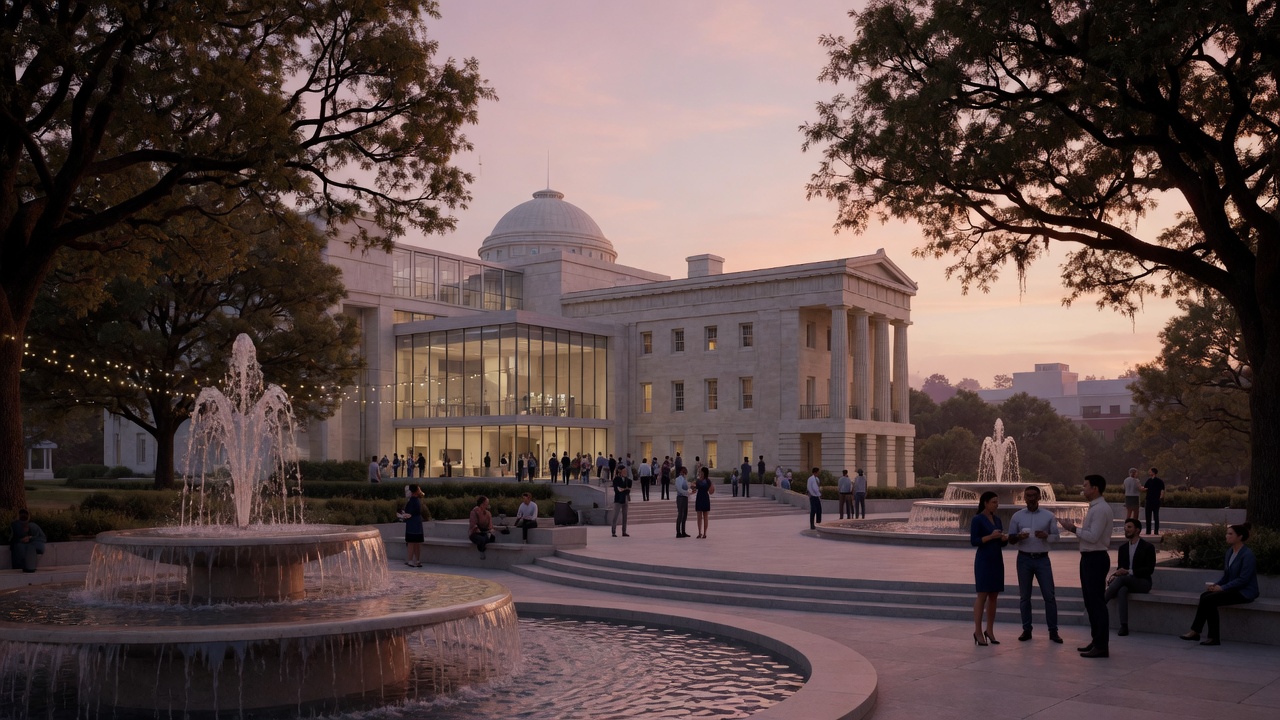
North Carolina State Senate · 2026 · educational cover · Greek Senate · American Future Type
Fifty desks, one Tuesday
This page is the arena for this chamber, this cycle. Unique teaching for the job lives on the office twin.
It is not a campaign. It does not crown a winner. It does not tell you who to vote for. Names belong on the official sample ballot.
March primary, May runoff, November general
- Election Day: Tuesday, November 3, 2026
- North Carolina held its primary 3 March 2026 and a primary runoff 12 May 2026 where a district actually needed one. Filing was 19 December 2025.
- The term is two years. This chamber is not staggered. All fifty State Senate seats are this Tuesday.
- Confirm leftover dates, any special, and the sample ballot on ncsbe.gov.
This is a regular State Senate election for the whole chamber. It is not a U.S. Senate race. North Carolina’s 2026 Senate race is Class II. It is not the Governor race — that desk is 2028. It is not the House — that is 120 seats, a different chamber, on the same Tuesday.
A map fight is a court file and a State Board of Elections posting. This page does not name candidates and does not declare a map winner.
The sample ballot is ncsbe.gov
Do not take names from a news comment or a text thread.
- Official candidate list / sample ballot — North Carolina State Board of Elections
- County board of elections in this county (North Carolina has 100)
- Current Senator of record (not the same thing as the 2026 nominee) — ncleg.gov
- Registration and ballot status — ncsbe.gov voter tools
If a site and the official sample ballot disagree, the sample ballot wins.
You are hiring Raleigh, not Washington
You are hiring fifty State Senators for North Carolina — two years, the upper house of state law, advice and consent that is not federal, a citizen session in a capital that is not Charlotte, a district that is not the whole state. Read the chamber page before you read a mailer. This is not a U.S. Senate seat, not a Governor, and not a Mayor.
Winners take office 1 January 2027. That is North Carolina’s clock. Confirm on the General Assembly.
Three-fifths of this chamber present and voting can override a Governor’s veto. That is thirty of fifty when the whole body is present. It is a constitutional clock. It is not a campaign line.
A grievance is a paper in Wake
A resident who was mistreated by a state agency, a confirmation that went sideways, or a district office that would not answer files on official doors: the Senator’s district office, the committee of jurisdiction, the State Ethics Commission where that statute actually reaches, the courts, and — for election process — the State Board of Elections and the county board. A Facebook thread is not a grievance.
Professional standards for a state employee sit with that agency and with the law the Senate actually wrote. The Attorney General is the state’s lawyer. The Senate is not that complaint box. Send people to ncleg.gov and ncsbe.gov.
If a Senate desk goes empty after this election, confirm the fill on the State Board of Elections. North Carolina has used Governor appointment from names submitted by the vacating member’s party. Do not invent a New York special as the default.
A hurricane track and a mountain freeze
Relief this chamber actually votes is a statute and an appropriation. A hurricane landfall on the Banks, a piedmont flood, a mountain freeze, a Cape Fear rise — mutual aid and emergency years still run through the Governor’s desk first. The Senate’s hour is the bill that funds the year after, the oversight that asks whether the money moved, and the rural hospital or road statute that was already on the calendar.
Wilmington is North Carolina. It is not the capital. Asheville is North Carolina. It is not Tennessee. Mutual aid with a Virginia or South Carolina county is real. Those counties do not vote in this chamber.
January 1, then two years
Bills. Confirmations. A two-year clock short enough that the next hire is already on the calendar. A district office that returns the call from a mountain county that never makes a Charlotte broadcast. Papers a constituent actually needs: a status on a bill, a confirmation notice, a referral to the agency that holds the license.
The staff is the office. A serious Senator is a serious principal: clear priorities, honest casework, no rumor as policy. The Legislative Building is the session. The district is the hire.
Three-fifths is a clock, not a slogan
Due process on this hire: a primary on 3 March 2026, a runoff on 12 May 2026 if a district actually needed one, a special if one actually posted, a general on 3 November 2026. North Carolina does not run New Jersey’s odd-year 2-4-4. It does not run New York’s June primary. All fifty seats are this even year. The next regular class is 2028.
The Constitution does not pause because a session is a biennium. Equal protection does not pause because a district is rural.
Rights this chamber must not run over
Counsel. Property. Peaceable assembly on Jones Street and in a mountain precinct. Equal protection in one hundred counties. The right to a sample ballot that matches what the machine or the paper actually shows.
This chamber writes state law that can touch a license, a tax, a school, a prison, a river, and a vote. It must not treat Raleigh as the state, Charlotte as the capital, or the Banks as the whole map. It must not treat a U.S. Senate race as this desk. It must not crown itself.
Raleigh is the capital. The people of the district hire the seat. The State Board of Elections is the door.