2026 Election — California State Assembly
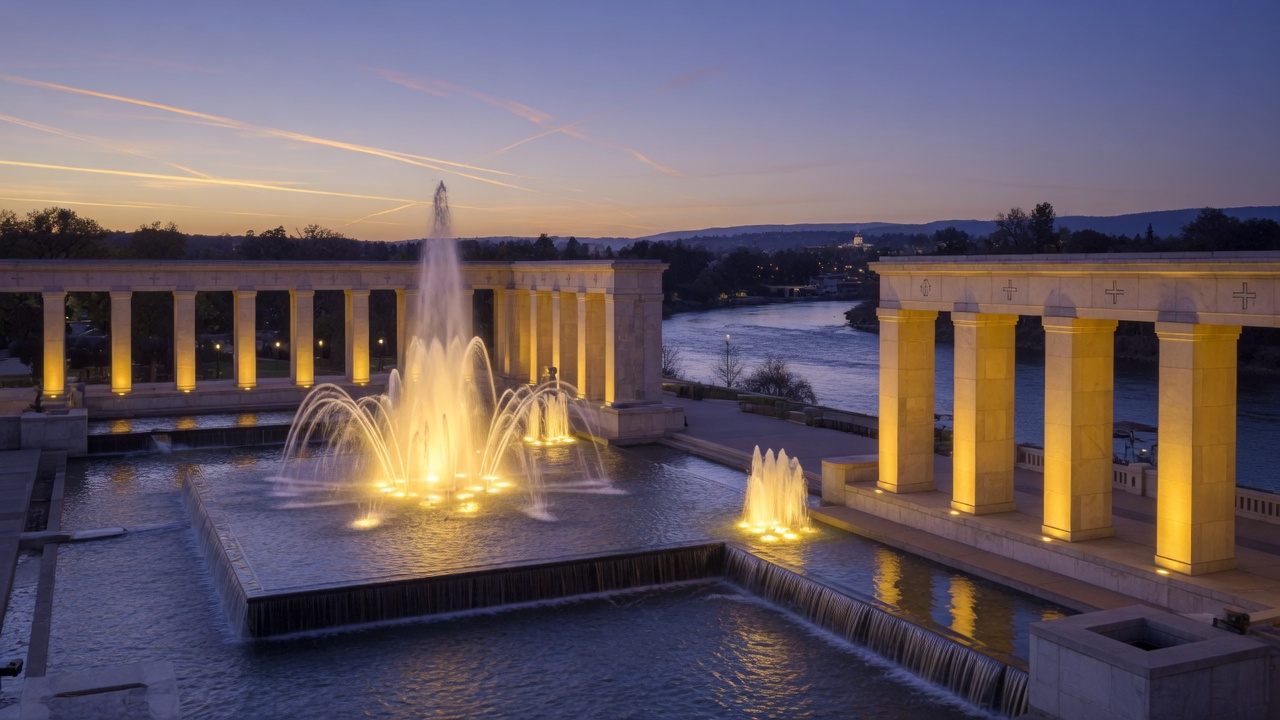
California State Assembly · 2026 · educational cover · Greek Orthodoxy civic grammar · American Future Type
Arena for the Assembly, all eighty
This page is the arena for this chamber, this cycle. Unique teaching for the job lives on the office twin.
It is not a campaign. It does not crown a winner. It does not tell you who to vote for. Names belong on the official sample ballot.
California’s lower house is the State Assembly. It is not a House of Representatives. Hire Members of the Assembly. Do not print a House title on this card.
Two-year desks, not a Senate stagger
- Election Day: Tuesday, November 3, 2026
- California held its top-two primary 2 June 2026.
- All eighty Assembly seats stand. This chamber is not staggered. Do not import the Senate’s even-numbered half-chamber onto this Assembly. Twenty of forty Senate seats are a different desk, same Tuesday.
Confirm leftover dates, any special, and the sample ballot on the California Secretary of State — Elections.
This is a regular Assembly election for the whole chamber. It is not a U.S. House race (California’s fifty-two congressional seats are a different desk). It is not a U.S. Senate race. California has no Class II and no 2026 U.S. Senate race. It is not the Governor race, though California’s Governor is also on 2026. It is not the State Senate.
The 2025–26 biennium’s last sitting days belong on the Chief Clerk’s calendar. Confirm adjournment there. November is the hire for the next two years. Winners take the oath the first Monday in December — 7 December 2026. This page does not name candidates and does not declare a map winner.
Do not transplant Alabama’s four-year House. Do not invent a Nebraska House — Nebraska has no lower house. Do not call this race a State House of Representatives race.
The top-two card is the sample
Do not take names from a news comment or a text thread.
- Official candidate list / sample ballot — sos.ca.gov/elections
- The county elections official in this county (California has 58)
- Current Member of record (not the same thing as the 2026 nominee) — assembly.ca.gov and the Chief Clerk
- Registration and ballot status — Secretary of State voter tools
If a site and the official sample ballot disagree, the sample ballot wins. Top-two means the general can be two candidates of the same party. That is California. Do not teach a closed partisan runoff as this clock.
Hiring an Assembly Member, not a Representative
You are hiring eighty Members of the Assembly for California — two years, the people’s house of state law, a full-time session in Sacramento, a June 15 budget clock, a district of about half a million that is still not a congressional map. Read the chamber page before you read a mailer. This is not a U.S. House seat, not a State Senator, not a Governor, and not a Mayor. This is not a “State Representative” title. The constitution says Member of the Assembly.
Winners take office the first Monday in December next following — 7 December 2026. Confirm Article IV, Section 2(a)(3). That is California’s clock. It is not midnight of election day. It is not January.
Twelve years lifetime in the Legislature is the cap for Members first elected after Proposition 28. Confirm that math on the official roster, not on a thread.
A complaint is a paper in Sacramento
A resident who was mistreated by a state agency, a budget line that never moved, or a district office that would not answer files on official doors: the Member’s district office, the committee of jurisdiction (often Budget or Appropriations), the Fair Political Practices Commission where that statute actually reaches, the courts, and — for election process — the Secretary of State and the county elections official. A Facebook thread is not a grievance. A coastal group chat is not a filing.
Professional standards for a state employee sit with that agency and with the law the Assembly actually wrote. The Attorney General is the state’s lawyer. The Assembly is not that complaint box. Impeachment, when it is actually this constitution’s file, is sole power in the Assembly and a Senate trial — Article IV, Section 18. Send people to assembly.ca.gov and sos.ca.gov/elections.
After an atmospheric river and a fire year
Relief this chamber actually votes is a statute and an appropriation. A fire year in the Sierra, an atmospheric river on a Delta levee, a drought on Valley ground, a harbor night that is still state work — mutual aid and emergency years still run through the Governor’s desk first. The Assembly’s hour is the bill that funds the year after, the Budget question that asks whether the money moved, and the water or fire statute that was already on the calendar.
Bakersfield is California. It is not Los Angeles. Eureka is California. It is not a Bay afterthought. Mutual aid with a Nevada or Oregon county is real. Those counties do not vote in this chamber.
June 15 is the service clock
Bills. A budget bill that must be introduced in each house and passed by midnight 15 June. A district office that returns the call from a precinct that never makes a coastal broadcast. A 72-hour in-print rule that is actually in the constitution. Papers a constituent actually needs: a status on an AB, a Legislative Analyst note, a referral to the agency that holds the license.
The staff is the office. A serious Member is a serious principal: clear priorities, honest casework, no rumor as policy. Sacramento is the session. The district is the hire. The grocery is the scale.
June 2 already ran; December is the oath
Due process on this hire: a top-two primary already held 2 June 2026, a general on 3 November 2026, a Governor-called special if a vacancy actually opened. Vote-by-mail, early, and Election-Day rules belong on the Secretary of State and the county elections official. Do not teach a shortcut. Do not teach Alaska’s ranked-choice as this clock.
A vacancy after this election is still a Governor-called election (Article IV, Section 2(d)) — not an appointment holdover. A map fight is a Citizens Redistricting Commission file and a court clock. Do not transplant another state’s four-year House onto the Assembly. All eighty seats are this cycle. Do not transplant the Senate’s even-numbered stagger onto this page.
The Constitution does not pause because a biennium dies on 30 November. Equal protection does not pause because a district is rural. The 72-hour rule does not pause because a calendar is crowded.
Rights on fifty-eight counties, not a coastal city as the state
Petition. Property. Peaceable assembly on the Capitol mall and in a Sierra precinct. Equal protection in fifty-eight counties and eighty Assembly districts. The right to a sample ballot that matches what the top-two card actually shows.
This chamber writes state law that can touch a license, a tax, a school, a prison, a river, a fire year, and a vote. It must not treat Los Angeles as the capital, San Francisco as the state, or a U.S. House race as this desk. It must not treat the State Senate as this desk. It must not call itself a House of Representatives. It must not crown itself.
Sacramento is the capital. The people of the district hire the seat. The Secretary of State is the door.